Anders Tyrrestrup
Founding Partner / CINO / Architect MAA / NORDMAK
Aarhus, Stockholm
aty@aart.dk
+45 25 32 32 78

The Royal Treasury will be a new underground extension to the museum at Rosenborg Castle in the heart of Copenhagen. Reinstating the moat around the castle as the project’s defining architectural gesture creates a new sensory museum experience, leading visitors from the city, along the water and beneath the moat to the royal treasures housed in The Royal Treasury.
For more than 400 years, Rosenborg Castle has been a prominent part of Copenhagen and today houses some of Denmark’s most important royal cultural treasures – from the Crown Jewels to the historic costume collections. More than 500,000 people visit the castle every year, and The Royal Treasury will create new settings both for welcoming its many visitors and for presenting the Royal Danish Collection.
The new treasury will be a significant addition to one of Denmark’s most valuable historic settings. The ambition has therefore been to create an architecture that does not compete with Rosenborg Castle, but instead strengthens the overall experience of the castle, the gardens and the collection.
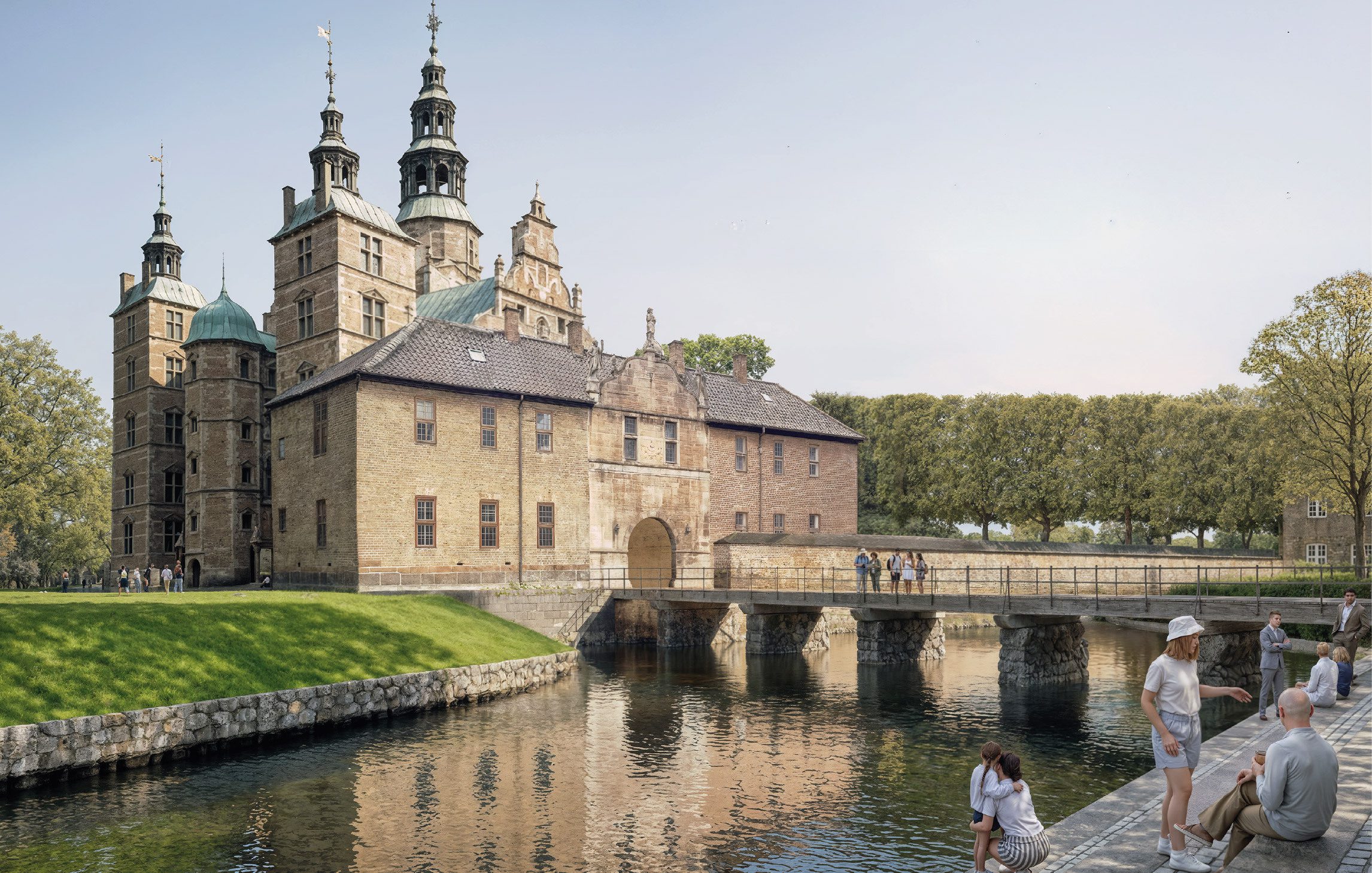
The Royal Treasury is defined by an architectural concept that does not compete with the castle, but instead heightens the experience of the place and stages its cultural heritage in a new way. The treasury becomes an underground addition in which the moat and the water take on new significance – historically protecting the castle, and now becoming an accessible element that gives something back to the place and its visitors.”Susanne Hansen, partner and architects, AART

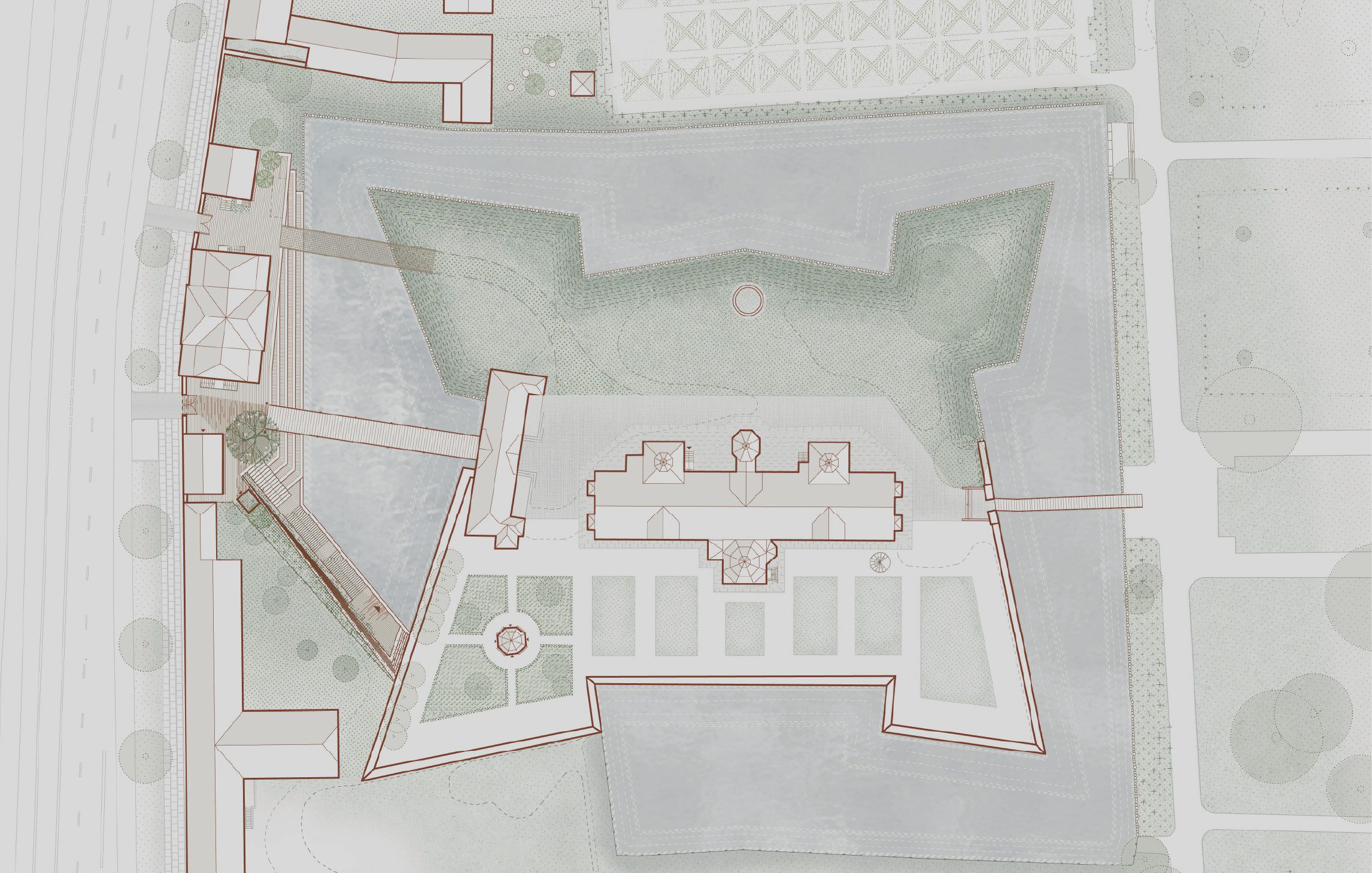
The new treasury takes its point of departure in the reinstatement of the moat around Rosenborg. The castle, the moat and the castle island once again become the focal points of the site, while the treasury itself is discreetly placed underground.
From the arrival square, visitors encounter two natural routes: across the water towards Rosenborg Castle, or alongside the water and down through a narrow passage into The Royal Treasury. In this way, the surface of the water becomes the unifying element between the historic building and the new museum experience.
The descent into The Royal Treasury is a central element of the architecture and becomes part of the museum experience itself. The proposal deliberately explores the transitions between light and darkness, above and below ground, past and present.
Visitors move alongside the water, past the exposed bastion wall and gradually descend beneath the moat. Daylight follows them down into the passage, maintaining a connection to the castle and the city above before they enter the darker underground exhibition spaces.


Like a passage through the ground and through history, the architecture opens up a gradual descent beneath the moat – into the treasury itself. The journey from the noise of the city to the underground museum becomes a sensory experience in its own right, emphasising both the historical significance of the place and the grandeur of what awaits below.Susanne Hansen, partner and architect, AART

Below ground, new exhibition spaces will allow the objects of the Royal Danish Collection to be experienced in new ways.

The architecture has a tactile, mineral character, with water, natural stone, concrete and metals forming a consistent material palette. The materials reference both the historic fabric of the castle and the subterranean setting, creating an experience that resonates with both history and the present.
With The Royal Treasury, the ambition is not simply to add more space for the museum and the presentation of its collection, but to strengthen the overall experience of Rosenborg as a historic place.